Hans-Hermann Richter studied at the Technical School for
Toy Design in Sonneberg in 1963 before beginning his studies at the College of Industrial
Design at the Burg in Halle in 1965. There, he made new friends. Harald Döring
and Ute Lohse are particularly worth mentioning here, while his friendships with Peter Hinz, and
Bärbel and Klaus Herre—who were employed in the metal workshops—did not develop until he
moved to Halberstadt.
After completing his studies in Halle, the painter Harald Döring moved to the village of
Langenstein (Halberstadt), while Richter, as a co-founder of the Pfeffermühle community,
set up a ceramics workshop there in Halberstadt in 1970.
In ’71, he earned his diploma as an architectural ceramicist, and to secure commissions,
he became a member of the Association of Visual Artists of the GDR in ’72, where he
remained until 1990.
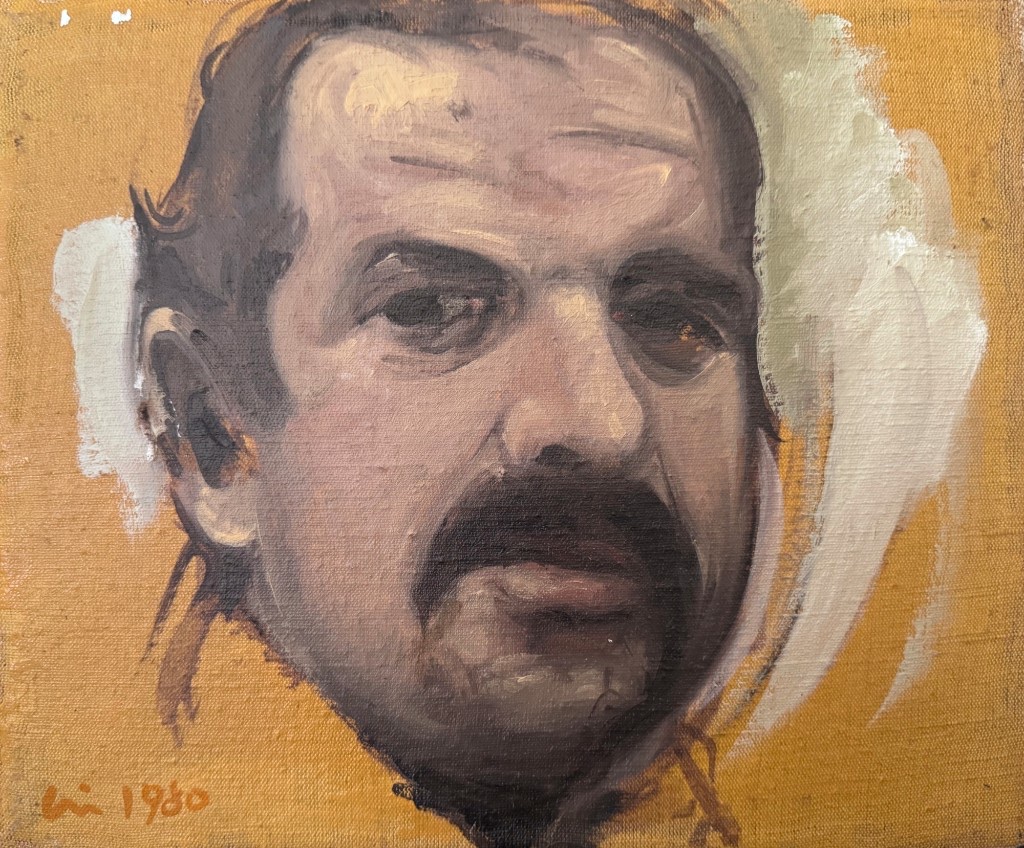
A year after receiving his diploma, he began studying figurative composition, and his
focus shifted to painting. In 1976, his work »Still Life with Violin 1« (oil on plywood)
received special attention at the VIII. Art Exhibition in Dresden.
Richter was not cut out for the hustle and bustle at the art commune for long and sought
solitude.
After becoming a master student under Professor Willi Sitte in 1978, he moved to Huy-Neinstedt,
a small village not far from Halberstadt, where he set up a new studio with exhibition space
in a four-sided farmstead. Six years after the fall of the Berlin Wall, he added another
studio in Bottendorf.
He played a pivotal role in establishing the Röderhof Art Association and has been an
active member of the Wernigerode Art Association for many years, where his works are exhibited.
In 2021, he made his field barn available for the art project »Keine Handbreit Wasser«.
As part of an art installation designed to draw attention to the region’s declining
groundwater levels, 30 wooden canoes were carried from Halberstadt across the Huy Mountains
and installed in the barn.
Among others, ilka Leukefeld and Inge H. Schmidt participated in the exhibition component
of the project.
Richter exhibited oversized landscapes featuring lettering and experimental overpaintings
of prints in his art studio. His works are characterized by his interpretation of the
changes in Richter’s immediate surroundings. He masterfully contrasts light and shadow,
thereby creating lasting impressions and testimonies of the time on his canvases.
The familiar yet strangely alien appearance of his paintings captivates the viewer;
contrasting colors, twilight, and an almost unreal sense of plasticity characterize
his oil paintings.
In 2024, an exhibition was held in his honour at the Schraube Museum in Halberstadt
to mark his 80th birthday and in recognition of his life’s work.
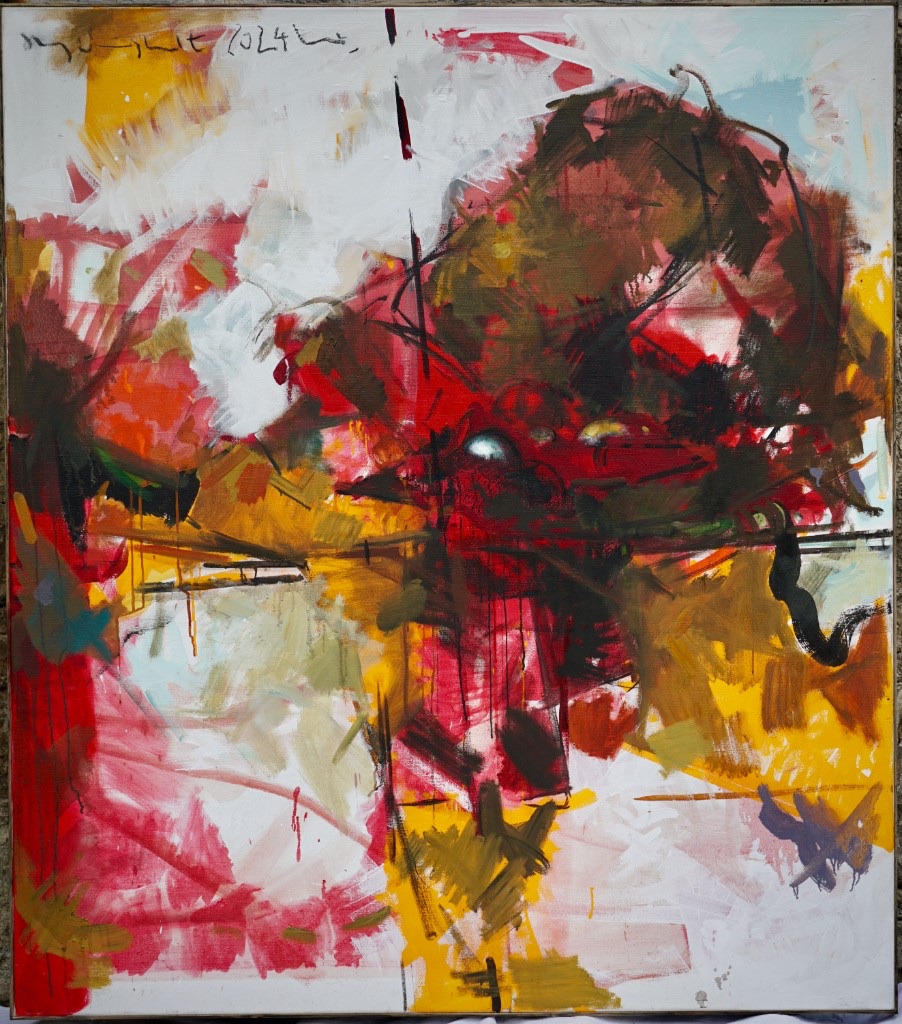
Hans-Hermann Richter is contributing new works to the VI. MKH-Biennale. Untitled I (Blue),
II (Pink), III (Yellow), and IV (Red) are four large-format, incredibly dynamic oil paintings
in which landscapes, lettering, and still lifes can be discerned.
Hans-Hermann Richter
Painter
| 1944 | January 27 / Born in Militsch (Upper Silesia) |
| 1962 | High school diploma in Roßleben; apprenticeship as a cabinetmaker |
| 1963 | Technical School for Toy Design in Sonneberg |
| 1965 | University of Industrial Design at Burg Giebichenstein in Halle |
| 1970 | Freelance work as a ceramicist, painter, and graphic artist, and established a studio in the Pfeffermühle community |
| 1971 | Received a diploma in architectural ceramics |
| 1972 | Member of the VBK (Association of Visual Artists) of the GDR |
| 1973 | Increasing focus on figurative compositions in painting |
| 1978–81 | Master student under Prof. Willi Sitte and establishment of a studio in Huy-Neinstedt |
| 1995 | Moved into the Bottendorf studio |
Study Trips
Italy, Greece, Corsica, Sardinia, Tunisia, France, Portugal, Bulgaria, Russia, and Holland in the Netherlands
Works in Collections
- Our Lady’s Monastery, Magdeburg
- Röderhof Art Association
- Wernigerode Art Association
- Halberstadt Savings Bank
- Halberstadt City Library and private collections
Regular participation in exhibitions since completing his studies